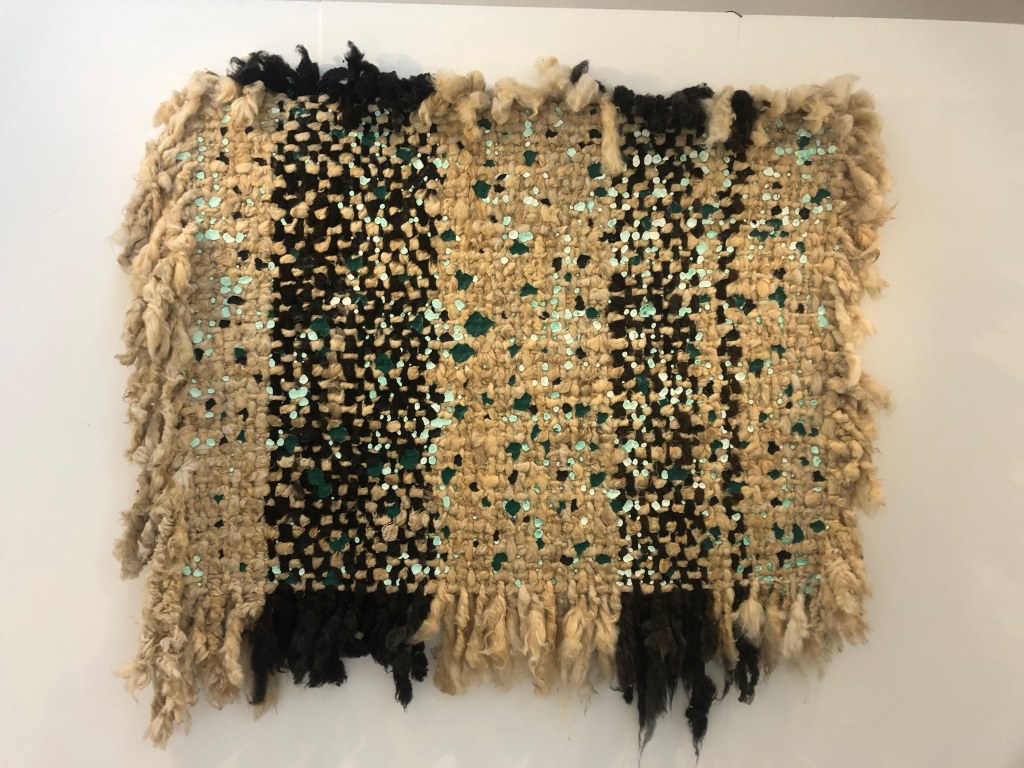
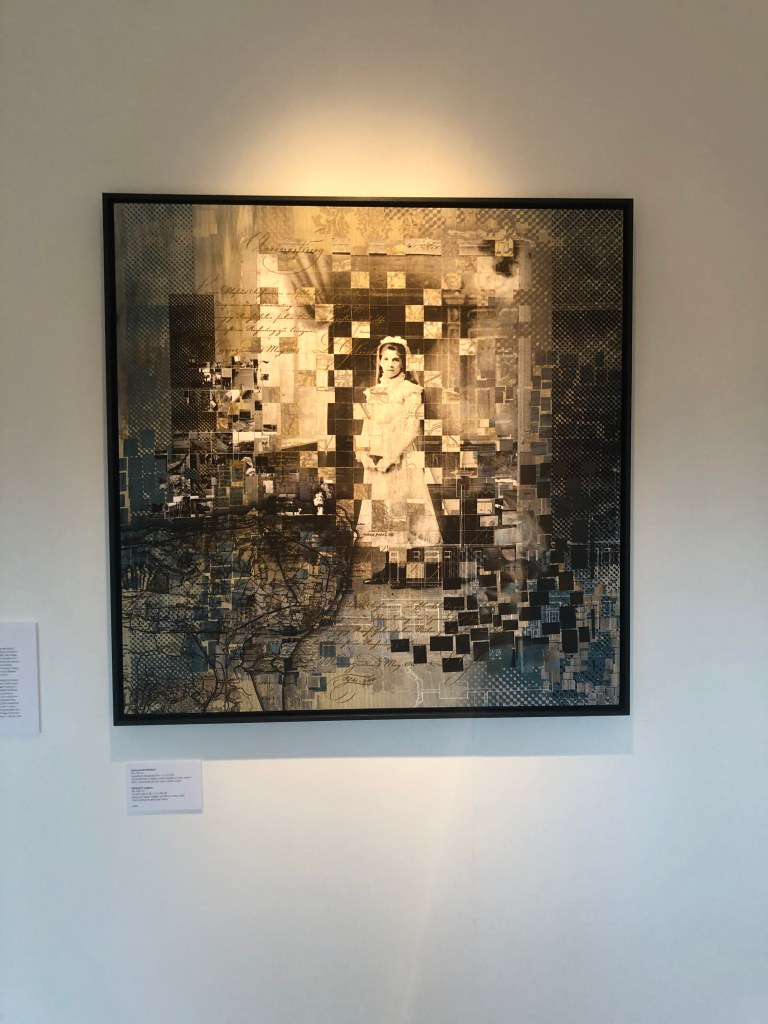
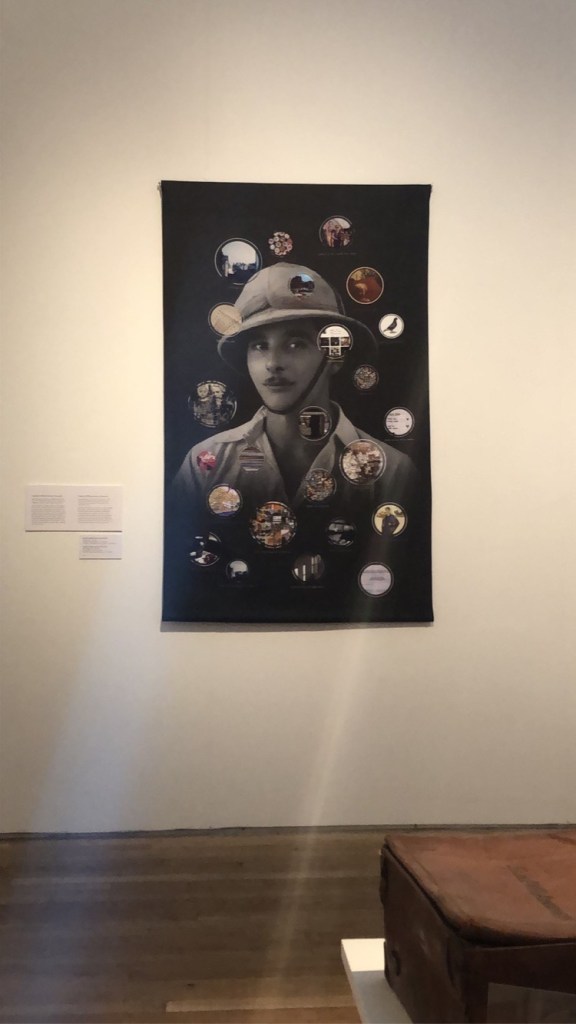
is an Australian textile artist. Often described as an Artivist she creates feminist, political and other artwork focussing on the human condition and fighting for social change. Her work is unique and powerful. She brings out a very powerful message in each piece. In this picture of one of her pieces there’s a girl and she’s full of these tranputo fake scars. This piece is eye catching because it brings up questions
Embroidery is the craft of decorating fabric or other materials using a needle to apply thread. Embroidery may also incorporate other materials such as pearls, beads, quills, and sequins.
The history
While embroidery is practiced across the world, its origin stems from China and the Near East. Early embroidery can actually be traced back to Cro-Magnon days or 30,000 B.C. Archeological finds from this time period reveal fossilized remains of heavily hand-stitched and decorated clothing. Other early examples of embroidery are found in China dating to the Warring States period between 5th and 3rd century B.C. In Sweden, the earliest finds of embroidery are from a period known as the Viking Age, around the 9th and 10th centuries. Around the year 1000, the practice of embroidery began to rise in Europe with the growth of the Christian church and royalty gaining power. Richly decorated garments and ornaments in the form of wall hangings and tablecloths were commissioned to display power and wealth.
Embroidery to me
Embroidery to me is very important. I fell in love with embroidery about three years ago when I first started college. What I love about embroidery is it’s very playful. You can experiment with it in loads of different ways and style it how you want. It can be really detailed or it can be simple.
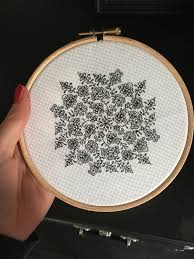
Blackwork is a form of embroidery generally using black thread, although other colors are also used on occasion. Sometimes it is counted thread embroidery which is usually stitched on even weave fabric. Traditionally blackwork is stitched in silk thread on white or off-white linen or cotton fabric. Sometimes metallic threads or coloured threads are used for accents. In the earliest blackwork, counted stitches are worked to make a geometric or small floral pattern. Historically, blackwork was used on shirts and chemises or smocks in England from the time of Henry VIII. blackwork was based on the belief that Catherine of Aragon brought many blackwork garments with her from Spain, and portraits of the later 15th and early 16th centuries show black embroidery or other trim on Spanish chemises.
Mary is a contemporary artist that uses felt. She mainly does sculptures and wall decor and gets inspired by music and nature, her work is very bold and unique. This is a photo of one of her sculptures, it’s a picture of three stumps with loads of leaf-like objects. The reason this has caught my eye is because of how the sculpture pulls you in. it has a flow like feeling to it but yet her leaf like felt objects have an amazing clean cut.
Janice Arnold
Janice became in love with felt making at a very young age. She makes felt pieces looking like rocks. She uses a variety of colours that go well together and she does them in different sizes.
Embroidery is the craft of decorating fabric or other materials using a needle to apply thread or yarn. The word embroidery comes from the French word broderie, meaning embellishment. While embroidery is practiced across the world, its origin stems from China. Embroidery can actually be traced back 30,000 B.C. Archeological finds from this time period reveal fossilized remains of heavily hand-stitched and decorated clothing. Other early examples of embroidery are found in China dating to 5th and 3rd century B.C. In Sweden, the earliest finds of embroidery are from a period known as the Viking Age, around the 9th and 10th centuries. Embroidery and most other fiber are believed to originate in the Orient and Middle East.
Debbie Smyth is textile artist most identifiable by her statement thread drawings; these playful yet sophisticated contemporary artworks are created by stretching a network of threads between accurately plotted pins. Her work beautifully blurs the boundaries between fine art drawings and textile art, flat and 3D work, illustration and embroidery, literally lifting the drawn line off the page in a series of “pin and thread” drawings.
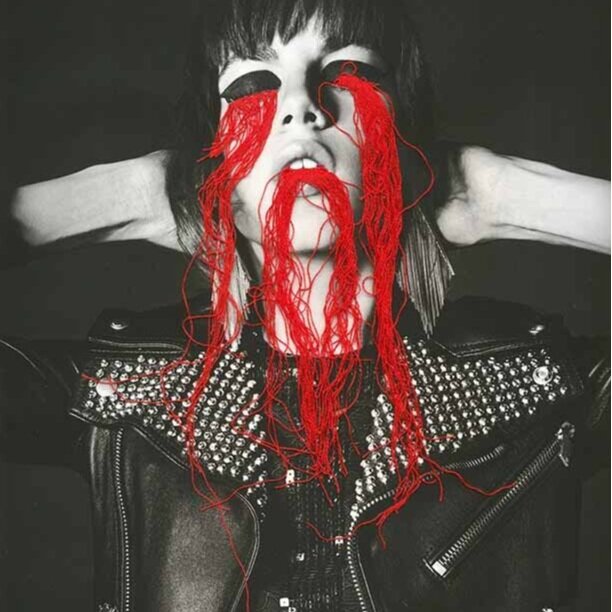
Inge Jacobsen was born in Galway, Ireland. She attended Kingston University, London, where she studied Photography. she incorporates hand embroidery in her portraits. her work has been exhibited in multiple shows around the world, from London to New York. In 2012 she was invited to exhibit in Nick Knight’s show studio Shop as part of the ‘Selling Sex’ show.
Ana Teresa Barboza is a Peruvian textile artist. she looks at natural forms suck as plants and landscapes. She is known for her mix media works that use patchwork, knitting or embroidery. Ana Teresa Barboza tracks the movement of plants with a time-based embroidery. She begins by projecting light onto plants in her studio, casting shadows onto a wall behind them. The artist traces these shadows each day, recording the movement and growth of the plants.
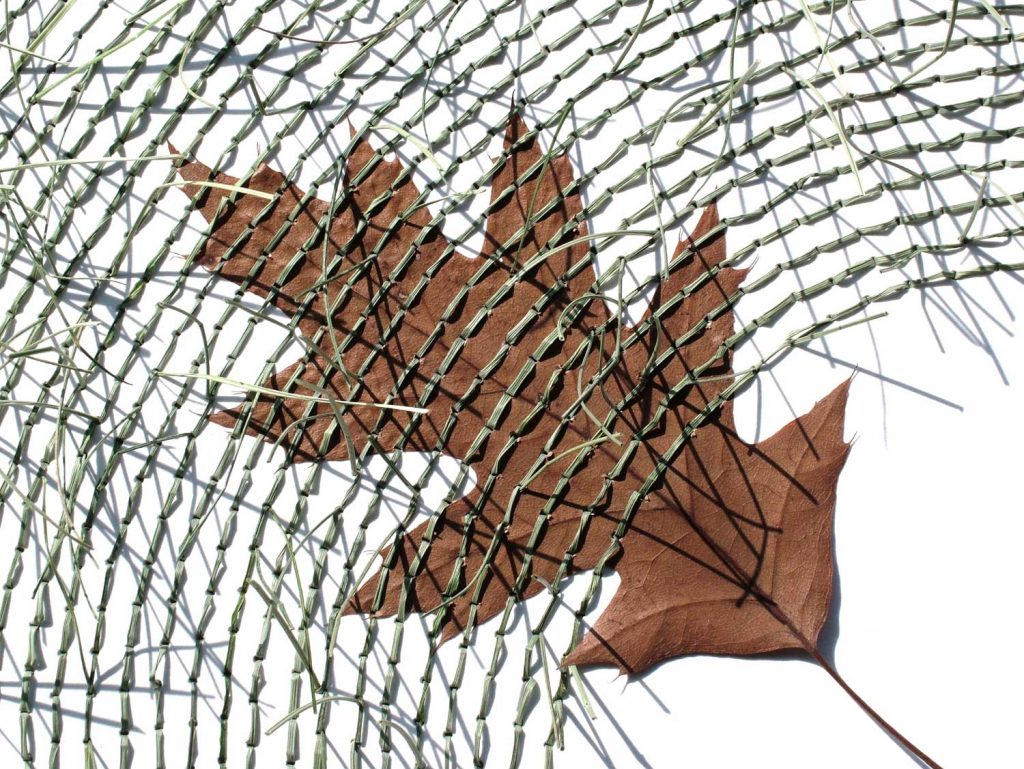
Kazuhito Takadoi is a contemporary arts who takes nature and frames it in a contemporary setting. All the materials he uses are sourced from nature too, there dried and then stitched. He is also intrigued by shadows
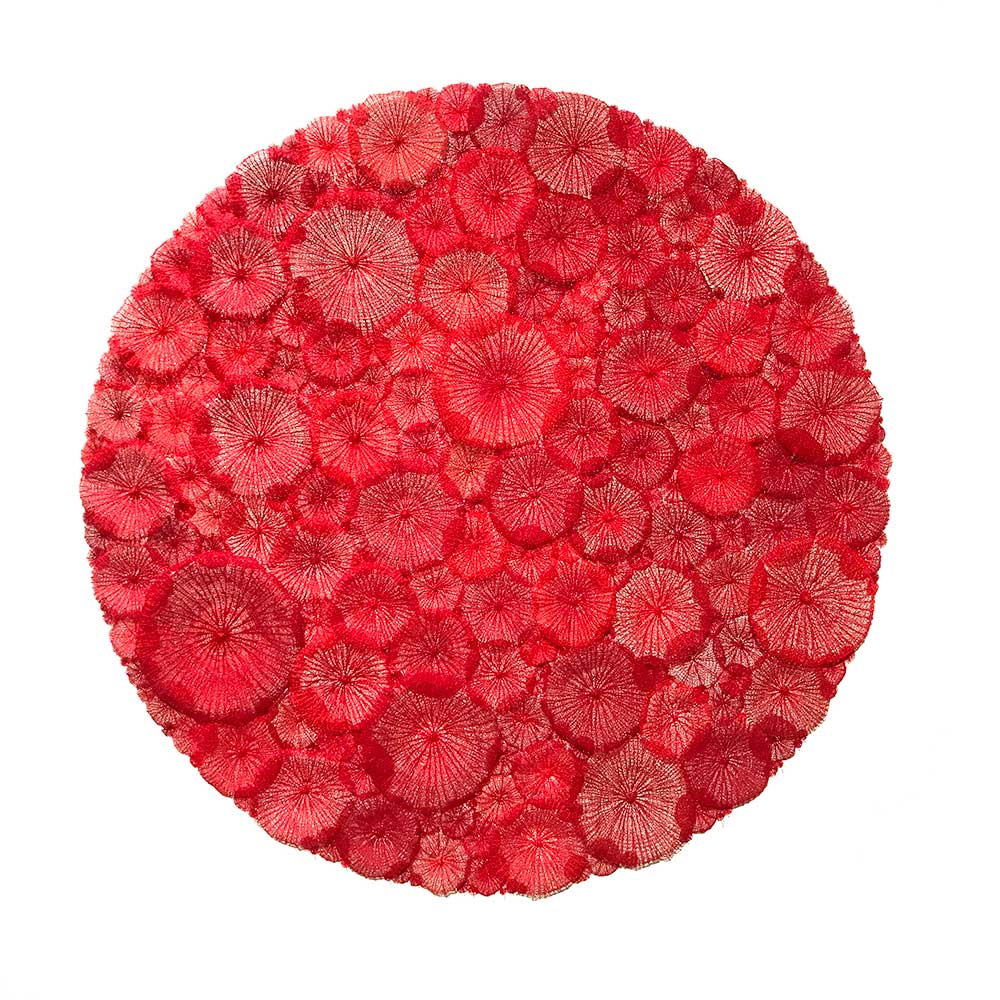
contemperary artist Meredith Woolnough draws upon the natural world as inspiration for her art.
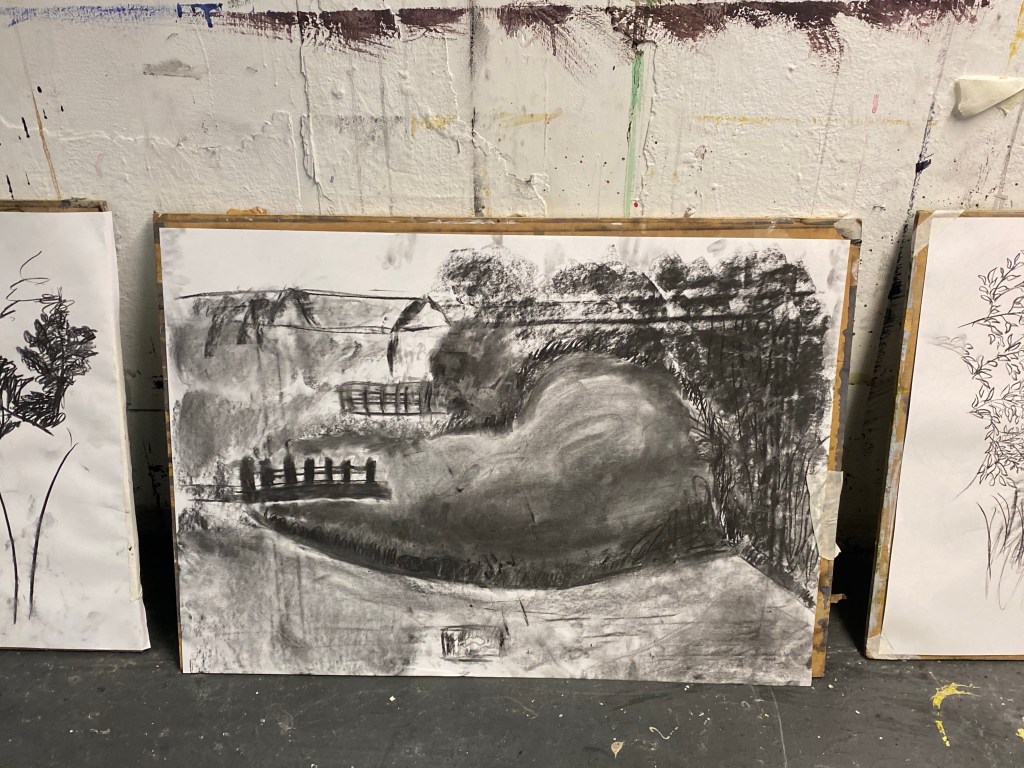
Darren is my tutor for Observational drawing. Today he took me and my classmates out to the lake near our college. We were given the task to observe the lake and draw what we see. Our tools were an A1 paper, a drawing board and charcoal. In front of my was the lake, the walk way around the lake, the wooden pier and loads of trees. We sat there observing the lake and drawing it for hours. After this, we went back to the life room and spoke a bit about Observational drawing. Darren spoke about how he would observe someone and how he places it on paper, he spoke about how his eye level would okay a big part in where he’s place the object on the paper.
The lake by the college
In this lesson I created this image above, In really not happy with this piece, I used the charcoal to show shade more then anything, I little bit too much if I’m honest, I got carried away with the shading of the lake and the trees. I should of started at the bottom of the page dark to show contrast and make the image look 3D. If I’d do it again I’ll add more detail to the image and use the charcoal in a more intelligent way .
Our homework is to make three 20×20 images of a small section of the drawing in colour. Also to research these artist: Bonnard, Cezanne, Peter Prendergast, Emrys Williams and John piper
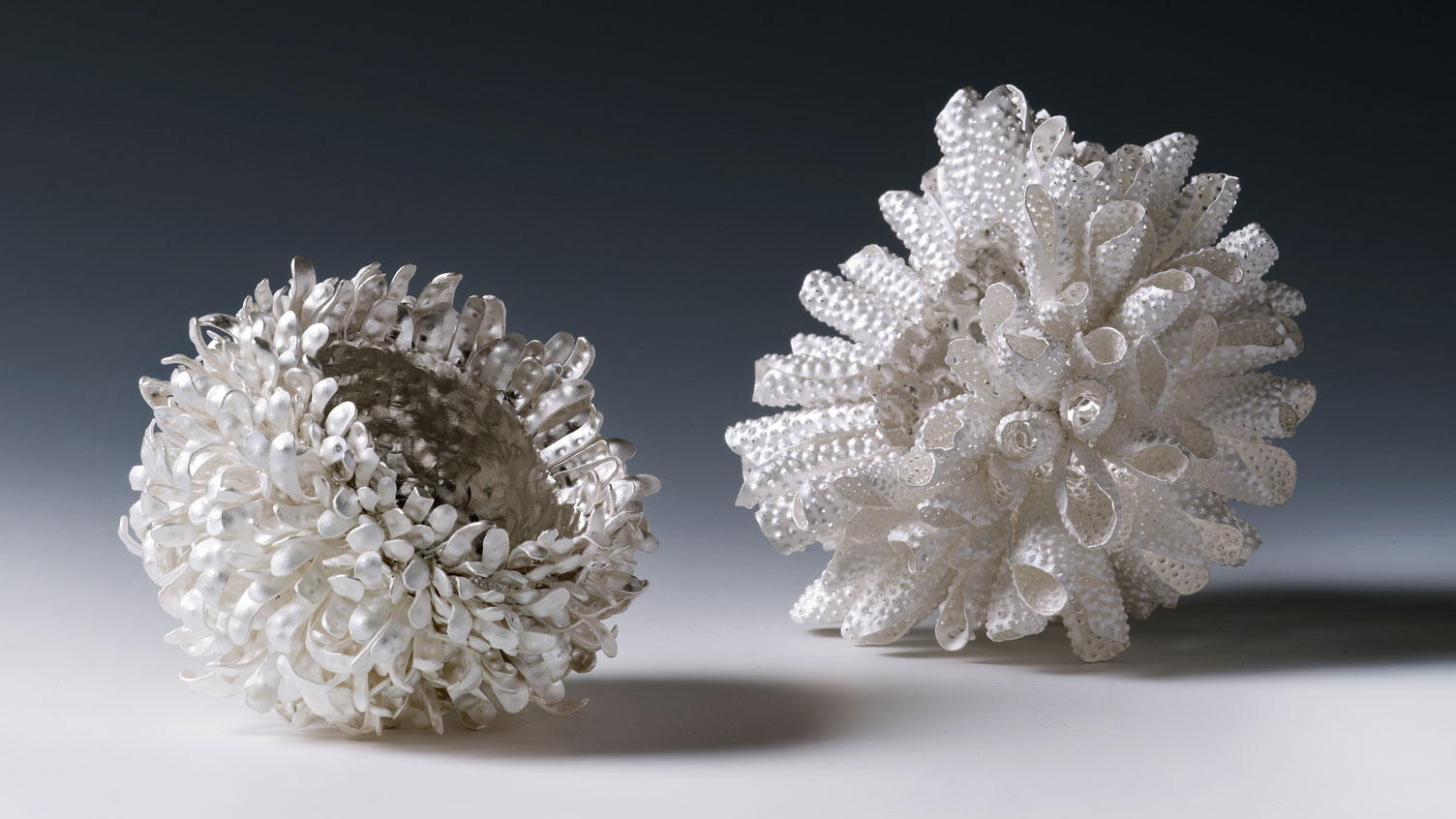
A lady named Junko Mori was giving a talk in Coleg Menai so we attended the talk and it was quite inspiring. She’s 45 years old but she’s achieved some great accomplishments in her life. She was born in south of Tokyo in a small town and at the age of 10 she started an obsession with microscopes. she attended university in Tokyo studying 3D design and figured out metal was the hardest out of all the materials to work with, which made her want to use it more and that’s when her metal work began. She’s made over 200 metal pieces at this point in her life. She has made many amazing pieces including a commission for 10 Downing Street where she made 4 black and white centrepieces. For someone who’s only 45 years old I find it very inspiring how much she’s achieved. In my opinion, her work looks amazing but I personally do not like 3D work
A man by the name of Tony Peart from the university of Cumbria came to speak to my college class. he had a lot of tips and important information to tell us such as:
Most universities want you, so it’s actually more important for you to make sure you pick the right university that you want to go to
how far away is it?
decide if you want to study in a small town or a big city
Always ask about accommodation and living costs. people tend to forget to ask about this.
Some universities give you studio space, some don’t. Some allow you to use different facilities as well.
This talk has helped me to start thinking about my future and where I’d like to study.
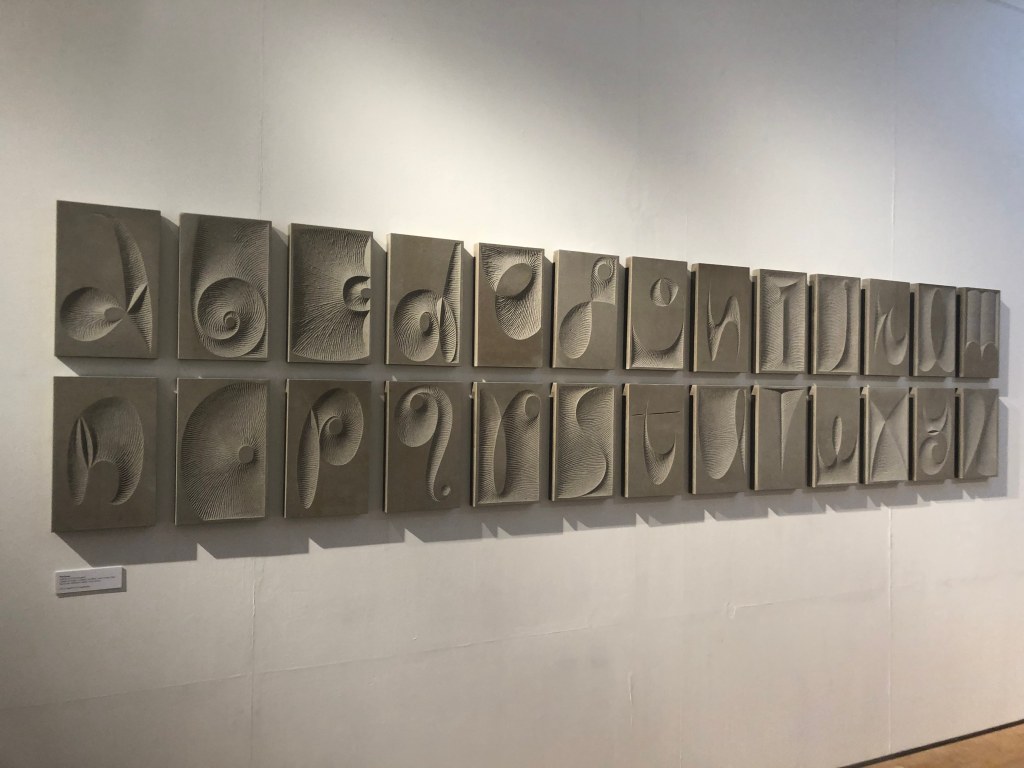
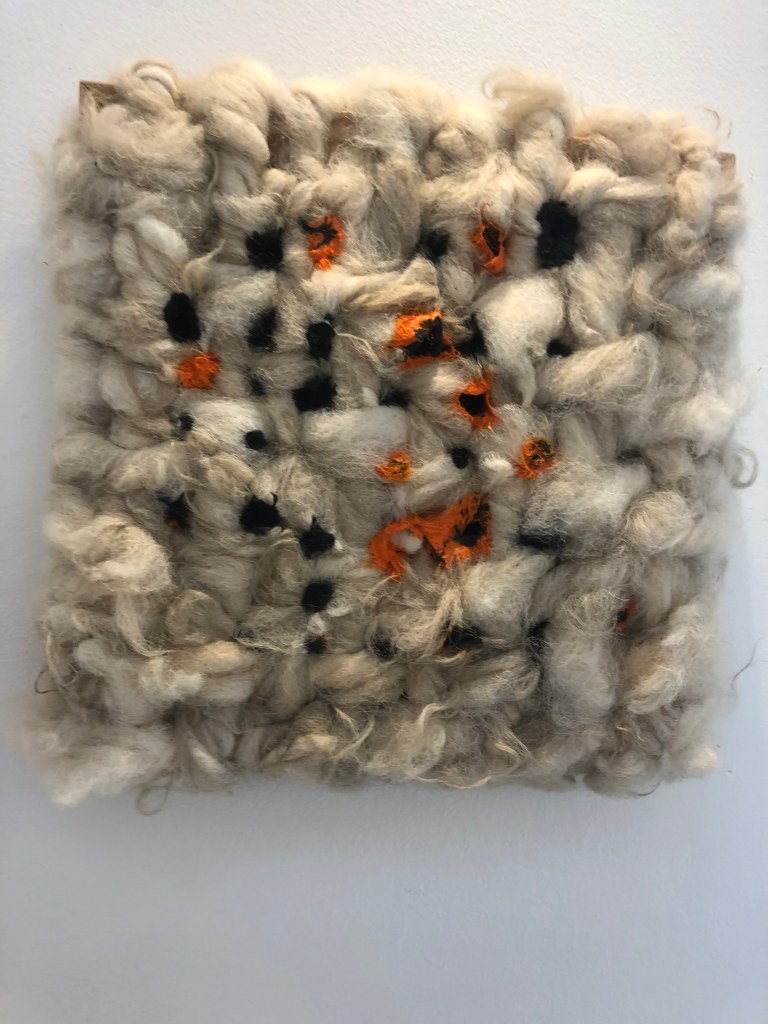
I went on a trip with college to the Ruthin crafts centre back in November to prepare for our next 5 weeks of college work. here are some on the piece’s that I liked.